Rare eye conditions are often unfamiliar to most people, yet they can have a profound impact on vision and quality of life. These disorders affect only a small portion of the population, but many of them lead to progressive vision loss, severe visual impairment, or even blindness if not detected early. Because these diseases are uncommon and frequently inherited, many Filipinos may live with symptoms for years without knowing the true cause.
Understanding these conditions is the first step toward protecting your eyesight and seeking proper care.
What Makes an Eye Condition Rare?
A disease is considered rare when it affects a very small number of people. In the medical field, these are sometimes called low-prevalence diseases, orphan diseases, or ultra-rare conditions. Many rare eye diseases are genetic or congenital, meaning they are caused by changes in the genes that control eye development or function. Others are linked to autoimmune reactions, inflammation, or disorders affecting other parts of the body.
Because rare conditions are often difficult to diagnose, they require specialized testing, a detailed medical history, and the guidance of an ophthalmologist who understands the complexities of these disorders.
Common Locations of Rare Eye Conditions
Rare eye diseases can affect different structures of the eye. Understanding where the problem occurs helps explain how vision is affected.
Retinal Rare Conditions (Posterior Segment)
The retina is responsible for capturing light and sending signals to the brain. When rare diseases affect this area, symptoms often include night blindness, tunnel vision, light sensitivity, or loss of central vision.
Key examples include:
- Retinitis Pigmentosa (RP) – A group of inherited retinal diseases that cause photoreceptor degeneration. Patients often notice difficulty seeing at night or narrowing peripheral vision.
- Stargardt Disease – A rare macular condition that leads to central vision loss, especially in younger individuals.
- Leber Congenital Amaurosis (LCA) – A severe congenital disorder causing significant visual impairment early in life.
- Usher Syndrome – A syndromic condition that affects both hearing and vision.
These diseases are among the rare eye conditions that cause blindness, especially when untreated or unmonitored.
Corneal and Anterior Segment Rare Conditions
The cornea plays a key role in focusing light. Rare conditions affecting this structure may lead to corneal clouding, thinning, or structural breakdown.
Notable examples are:
- Keratoconus – A thinning disorder where the cornea bulges outward into a cone shape.
- Lattice Corneal Dystrophy – A hereditary condition that causes protein deposits to build up in the cornea.
- Keratoglobus and Granular Corneal Dystrophy – Ultra-rare disorders associated with extreme thinning or clouding.
Although some of these conditions are not always severe, advanced cases can cause significant vision impairment and may require specialized care.
Optic Nerve and Visual Pathway Rare Disorders
The optic nerve transmits visual information from the eye to the brain. When it is damaged, even a healthy retina cannot produce clear vision.
Common rare disorders in this category include:
- Leber’s Hereditary Optic Neuropathy (LHON) – A mitochondrial genetic disorder that causes sudden central vision loss, often in young adults.
- Optic Atrophy – A final pathway of many rare neurological conditions, leading to reduced visual signals.
- Neuromyelitis Optica (NMO) – An autoimmune condition affecting both the optic nerve and spinal cord.
Rare Uveal and Autoimmune Conditions
The uvea is the middle layer of the eye. When attacked by inflammation or autoimmune reactions, the results can be severe.
Examples include:
- Vogt-Koyanagi-Harada (VKH) Syndrome – A rare autoimmune condition more common in certain Asian populations, including Filipinos.
- Birdshot Chorioretinopathy – A rare inflammatory disease linked to the HLA-A29 gene.
- Sympathetic Ophthalmia – A rare bilateral inflammation that can occur after trauma to one eye.
These conditions may lead to swelling, blurry vision, light sensitivity, or long-term vision damage.
Rare Genetic Eye Conditions: Why Do They Occur?
Many rare eye diseases are inherited. The way they are passed down varies:
- Autosomal Dominant – One parent carries the faulty gene.
- Autosomal Recessive – Both parents are carriers.
- X-Linked – The faulty gene is on the X chromosome.
- Mitochondrial Inheritance – Passed through maternal lines, as seen in LHON.
Because genetic disorders can run silently in families, genetic counseling and testing can help confirm a diagnosis and guide treatment decisions.
How Rare Eye Conditions Are Diagnosed
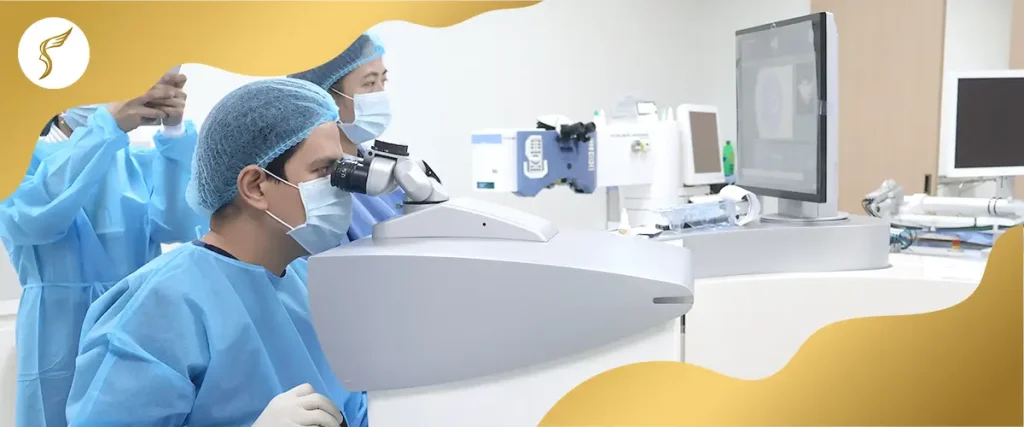
Diagnosis often requires more than a standard eye exam. Ophthalmologists may use:
- Optical Coherence Tomography (OCT)
- Electroretinography (ERG)
- Fundus Photography
- Visual Field Testing
- Genetic Testing
These tests help uncover patterns that distinguish rare eye diseases from common conditions.
Treatment Options and New Research
There is no single cure for most rare eye diseases, but many treatments can slow progression, protect remaining vision, or manage symptoms.
Current approaches include:
- Anti-inflammatory medications for autoimmune-related conditions
- Corneal treatments, including cross-linking or transplantation
- Low-vision rehabilitation services
- Genetic counseling for families
- Monitoring through regular imaging
Emerging treatments such as gene therapy, CRISPR-based research, and investigational drugs show promise. One breakthrough example is Luxturna, a gene therapy approved for certain forms of LCA. While not accessible to all conditions yet, research continues to grow rapidly.
FAQs About Rare Eye Conditions
Not always. Many are genetic, but others are caused by autoimmune disorders, inflammation, or systemic diseases.
Watch for night blindness, sudden vision loss, persistent blurry vision, or unusual light sensitivity. These may indicate a rare disorder.
Yes. Conditions like retinitis pigmentosa, LCA, and advanced optic neuropathies can lead to significant visual impairment.
If you have a family history of unexplained vision loss, genetic testing may help identify inherited disorders.
No. LASIK corrects refractive errors but does not treat genetic or structural diseases. However, Shinagawa’s screening process ensures that any rare conditions are detected before surgery.

By submitting this form, you consent to the processing of your personal data in accordance with our Data Privacy Notice.
How Shinagawa Lasik & Aesthetics Can Help
Rare eye conditions may be uncommon, but their effects on vision can be life-changing. Early detection, proper diagnosis, and guidance from an eye care expert are essential. At Shinagawa Lasik & Aesthetics, our advanced eye screening technology and experienced ophthalmologists help identify both common and rare eye conditions with accuracy and care. Whether you’re experiencing unusual symptoms or simply want peace of mind, our team is here to guide you toward better eye health and long-term clarity.
For inquiries, questions, and appointments, call our Patient Care Lines:
🖥 Talk to our Consultants via Livechat: https://direct.lc.chat/6329011/
📱 Instagram: https://instagram.com/shinagawa_ph/
Citations and Resources
Shinagawa LASIK & Aesthetics strives to provide accurate and reliable information regarding LASIK procedures and eye health. We utilize primary sources to support our content, including peer-reviewed scientific studies, data from reputable medical organizations, and expert opinions. We also reference established publications and research where appropriate.
Our commitment to evidence-based information ensures that you receive trustworthy and up-to-date details to make informed decisions about your eye care.
Resources Used in This Article
- Springer Nature. “Clinical and genetic characterization of patients with eye diseases included in the Spanish Rare Diseases Patient Registry, https://link.springer.com/article/10.1186/s13023-024-03242-6″
- Eyes On Genes. “EYES ON INHERITED RETINAL DISEASES (IRDs), https://www.eyesongenes.com/inherited-retinal-diseases/”
- Fighting Blindness. “Rare Retinal Conditions, https://www.fightingblindness.org/diseases/rare-retinal-conditions”
- Bright Focus Foundation. “Eye Diseases That Can Cause Legal Blindness, https://www.brightfocus.org/resource/eye-diseases-that-can-cause-legal-blindness/”
- WHO. “Noncommunicable Diseases, Rehabilitation and Disability, https://www.who.int/teams/noncommunicable-diseases/sensory-functions-disability-and-rehabilitation/eye-care-vision-impairment-and-blindness”
- PubMed. “Worldwide carrier frequency and genetic prevalence of autosomal recessive inherited retinal diseases, https://pubmed.ncbi.nlm.nih.gov/31964843/”
- Sano. “Exploring inherited retinal disorders (IRDs): Causes, challenges, and future treatments [report], https://sanogenetics.com/resources/blog/exploring-inherited-retinal-disorders-irds-causes-challenges-and-future-treatments-report”