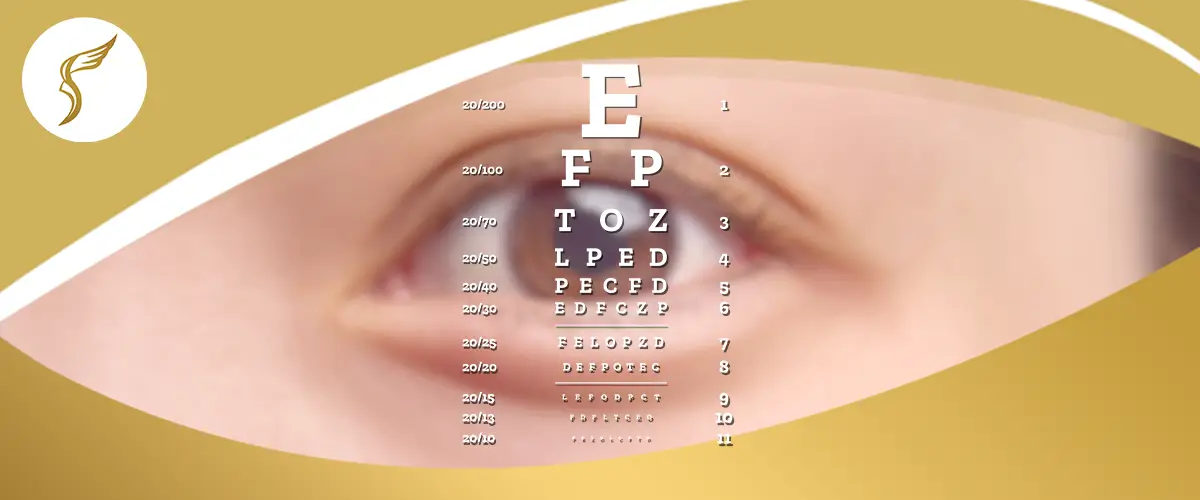
Many people believe that having 20/20 vision means their eyesight is perfect. Others are confused when their eye test results show different numbers for the left and right eye. These questions are common, especially among adults who want to protect their eyesight as they age or consider vision correction options.
Understanding the true meaning of 20/20 vision can help you make better decisions about eye care. It also helps clear up common myths about what “normal” vision actually means.
What Is 20/20 Vision?
20/20 vision refers to visual acuity, which is the sharpness or clarity of distance vision. It describes how clearly you can see details from a standard testing distance of 20 feet.
If you have 20/20 vision, it means you can see an object at 20 feet as clearly as a person with normal eyesight should see it at the same distance. This measurement is commonly tested using a Snellen chart, the familiar eye chart with letters that get smaller on each line.
In countries that use the metric system, this is written as 6/6 vision, which means the same thing as 20/20.
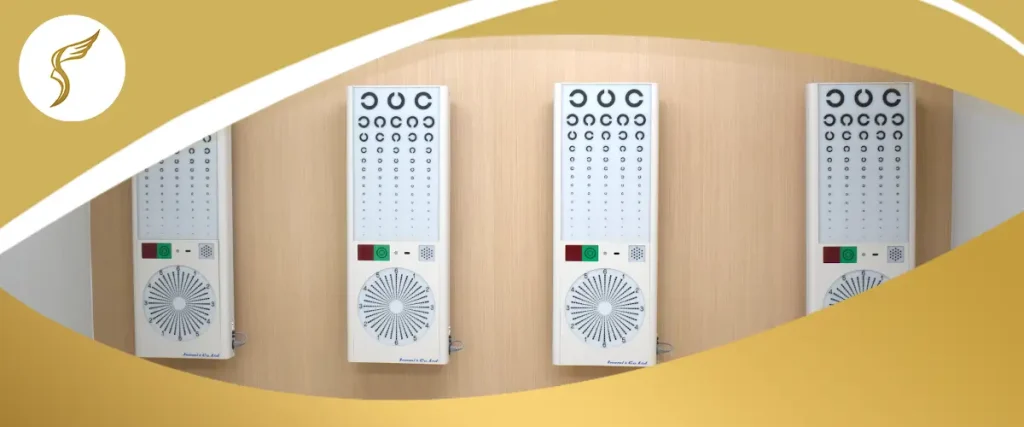
How the Snellen Eye Test Works
During a standard eye exam, you are asked to read letters on the Snellen chart while standing at a fixed distance. Each eye is tested separately to measure baseline visual acuity.
You may be asked to:
- Cover one eye at a time
- Read letters from top to bottom
- Continue until the letters become too small to see clearly
The result is written as a fraction, such as 20/20 or 20/40. The top number refers to the testing distance, while the bottom number compares your vision to a standard observer.
Can Vision Be Better or Worse Than 20/20?
Yes, vision can be better or worse than 20/20.
Some people have 20/15 or even 20/10 vision, meaning they can see details from farther away than the average person. This is often described as sharper-than-average vision.
On the other hand, 20/40 vision means you must stand closer to see what a person with normal vision can see at 20 feet. This level is commonly used as a minimum requirement for driving.
20/200 vision is considered the threshold for legal blindness, even with corrective lenses.
Normal Eye Vision Left and Right: What OD and OS Mean
It is very common for the right eye (OD) and left eye (OS) to have different visual acuity results.
For example:
- Right eye: 20/20
- Left eye: 20/30
This does not automatically mean something is wrong. Slight differences between eyes are normal and may be related to eye dominance, temporary dryness, or mild refractive changes.
Your brain usually combines input from both eyes to create a single image, a process known as binocular vision.
Why Some People Don’t Have 20/20 Vision
Not having 20/20 vision is often caused by refractive errors, where light does not focus correctly on the retina.
Common causes include:
- Myopia (nearsightedness) – distant objects appear blurry
- Hyperopia (farsightedness) – close objects are harder to see
- Astigmatism – distorted or uneven focus
- Presbyopia – age-related difficulty seeing near objects
These occur due to how the cornea, crystalline lens, and length of the eyeball bend light toward the retina and macula.
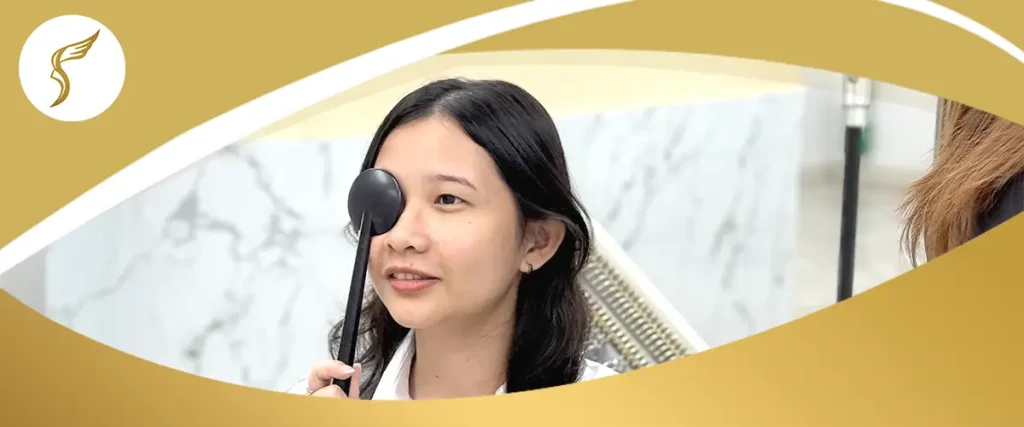
How Eye Care Professionals Measure and Correct Vision
Eye doctors use a combination of tests to measure visual acuity and determine if correction is needed.
An optometrist performs vision testing and prescribes corrective lenses. An ophthalmologist handles medical and surgical eye care, including advanced treatments.
Prescriptions are measured in diopters, which indicate lens strength. These values are adjusted to help light focus properly on the retina.
Many people achieve clear vision with:
When Should You Have Your Eyes Checked?
Even if you have 20/20 vision, regular eye exams are important.
Consider booking an eye check if you notice:
- Frequent headaches or eye strain
- Blurry vision in one eye
- Difficulty seeing at night
- Sudden changes in vision
Early detection plays a key role in maintaining long-term eye health.
Frequently Asked Questions About 20/20 Vision
It means you can see clearly at 20 feet what a person with normal eyesight should see at the same distance.
Yes. Small differences between eyes are common and usually not a cause for concern.
Yes. You may need glasses for reading, screen use, or specific conditions even with normal distance vision.
Not always. Vision can change with age, health conditions, or lifestyle factors.
Many patients achieve 20/20 vision after LASIK, but results vary depending on individual eye health.
Conclusion
Understanding the true meaning of 20/20 vision helps set realistic expectations about eye health. While it is a valuable benchmark for distance clarity, it does not reflect every aspect of how your eyes function.

By submitting this form, you consent to the processing of your personal data in accordance with our Data Privacy Notice.
Regular eye exams, proper guidance, and informed decisions are essential for maintaining clear and comfortable vision throughout life. At Shinagawa Lasik & Aesthetics, eye care is guided by expertise, precision, and patient education—helping individuals make confident choices about their vision and overall eye health.
For inquiries, questions, and appointments, call our Patient Care Lines:
🖥 Talk to our Consultants via Livechat: https://direct.lc.chat/6329011/
📱 Instagram: https://instagram.com/shinagawa_ph/
Citations and Resources
Shinagawa LASIK & Aesthetics strives to provide accurate and reliable information regarding LASIK procedures and eye health. We utilize primary sources to support our content, including peer-reviewed scientific studies, data from reputable medical organizations, and expert opinions. We also reference established publications and research where appropriate.
Our commitment to evidence-based information ensures that you receive trustworthy and up-to-date details to make informed decisions about your eye care.
Resources Used in This Article
- American Academy of Ophthalmology. “What Does 20/20 Vision Mean?, https://www.aao.org/eye-health/tips-prevention/what-does-20-20-vision-mean”
- American Optometric Association. “Visual Acuity, https://www.aoa.org/healthy-eyes/vision-and-vision-correction/visual-acuity”
- National Library of Medicine. “Snellen Chart, https://www.ncbi.nlm.nih.gov/books/NBK558961/”
- MedlinePlus. “Visual acuity test, https://medlineplus.gov/ency/article/003396.htm”