
Last updated on January 19th, 2026 at 11:50 am
Peripheral vision—often called side vision—is an essential part of how we see and move through the world. While most people focus on central vision for reading or recognizing faces, peripheral vision quietly supports balance, awareness, and safety in everyday life.
Understanding what peripheral vision is, how it works, and what happens when it is lost can help people recognize early warning signs and seek timely eye care.
What Is Peripheral Vision?
Peripheral vision refers to everything you can see outside the direct center of your gaze. It is sometimes described as seeing out of the corner of the eye or having a wide-angle view of your surroundings.
In simple terms, side vision allows you to notice movement, shapes, and changes around you without turning your head. It helps you walk safely, avoid obstacles, and stay aware of what is happening around you.
Together with central vision, peripheral vision forms your full visual field.
How Peripheral Vision Works Inside the Eye
Peripheral vision relies on specialized light-sensing cells called photoreceptors, located mainly along the outer edges of the retina.
These photoreceptors are known as rods. Rods are highly sensitive to light and movement, especially in dim conditions. They are excellent at detecting motion and changes in brightness, but they are not good at seeing fine detail or color.
By contrast, cones, which are concentrated in the macula at the center of the retina, handle sharp detail and color vision.
Once light is detected, signals travel through the optic nerve to the visual cortex in the brain, where images are processed and interpreted.

What Does Peripheral Vision Loss Feel Like?
Loss of peripheral vision often happens gradually, making it easy to miss in the early stages.
Many people describe it as:
- A narrowing of vision
- Dark or shadowy edges
- A feeling that vision is “closing in” from the sides
This pattern is commonly called tunnel vision, which is a type of peripheral field defect rather than a specific diagnosis.
As side vision fades, everyday tasks can become more challenging. People may bump into walls, trip over objects, or feel uneasy when walking in crowded areas. Driving can also become difficult, particularly at night.
Some individuals experience blind spots, known as scotomas, or worsening night vision, medically called nyctalopia.
How Peripheral Vision Loss Affects Daily Life
Peripheral vision plays a major role in spatial awareness, orientation, and mobility. When it is reduced, simple movements may require more effort and concentration.
People with peripheral vision loss often rely more on head and body movements to scan their surroundings. Depth perception and motion perception may also feel less reliable, increasing the risk of falls or accidents.
This is why eye specialists often recommend orientation and mobility (O&M) strategies or vision rehabilitation support for those with significant field loss.
How Is Peripheral Vision Tested?
Eye doctors use several methods to assess side vision.
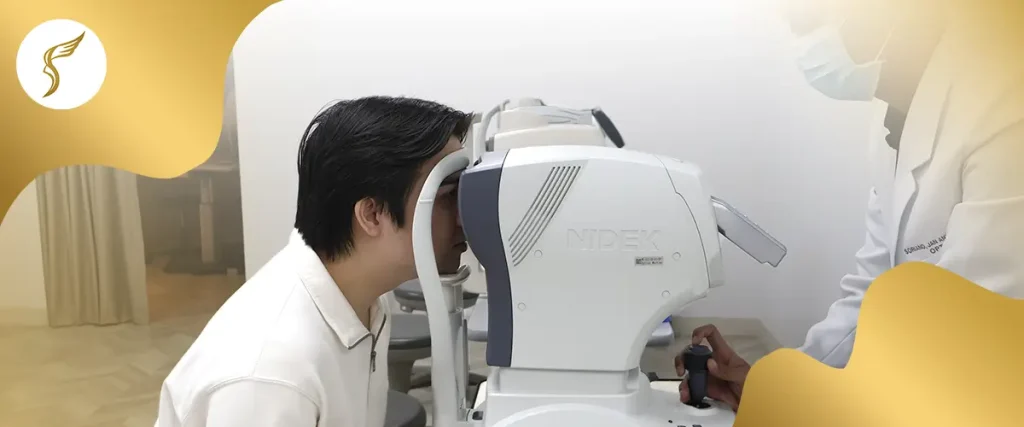
The most common is the Visual Field Test, also known as perimetry. During this test, you focus on a central point while small lights appear in different areas of your visual field. Your responses help map blind spots and measure sensitivity.
Simple screening exams, such as movement checks or finger-counting tests, may also be used during routine eye exams.
Testing is usually performed by an ophthalmologist or optometrist, and in complex cases, a neuro-ophthalmologist may be involved.
Can Peripheral Vision Loss Be Treated?
Treatment depends entirely on the underlying cause.
For conditions like glaucoma, the goal is to slow progression and protect remaining vision. For retinal or neurological causes, management may involve medical treatment, monitoring, or rehabilitation support.
While lost peripheral vision cannot always be restored, early detection can make a significant difference in preserving vision and maintaining quality of life.
When Should You See a Doctor Immediately?
Seek urgent medical care if you experience:
- Sudden loss of side vision
- A shadow or curtain moving across your vision
- Vision loss with headache, weakness, or confusion
These symptoms may indicate a serious eye or neurological condition that requires prompt attention.
Conversational FAQs
Peripheral vision is what you see on the sides without looking directly at it. It helps you notice movement and stay aware of your surroundings.
Side vision is medically called peripheral vision.
Tunnel vision can be permanent or temporary, depending on the cause. Conditions like glaucoma cause gradual, lasting loss, while migraines may cause temporary changes.
In some cases, such as temporary nerve or migraine-related issues, vision may return. In many chronic eye diseases, treatment focuses on preventing further loss.
Peripheral vision is tested using visual field exams that measure how well you see light and movement in different areas of your visual field.
Final Thoughts
Peripheral vision plays a vital role in safety, movement, and daily independence. Because changes often occur slowly, regular eye examinations are essential—especially for those with risk factors such as age, family history, or chronic health conditions.

By submitting this form, you consent to the processing of your personal data in accordance with our Data Privacy Notice.
At Shinagawa Lasik & Aesthetics, eye health is approached with precision, experience, and patient-centered care. As one of the most trusted names in vision correction and eye care, Shinagawa remains committed to early detection, advanced diagnostics, and protecting the quality of sight for patients across the Philippines.
For inquiries, questions, and appointments, call our Patient Care Lines:
🖥 Talk to our Consultants via Livechat: https://direct.lc.chat/6329011/
📱 Instagram: https://instagram.com/shinagawa_ph/
Citations and Resources
Shinagawa LASIK & Aesthetics strives to provide accurate and reliable information regarding LASIK procedures and eye health. We utilize primary sources to support our content, including peer-reviewed scientific studies, data from reputable medical organizations, and expert opinions. We also reference established publications and research where appropriate.
Our commitment to evidence-based information ensures that you receive trustworthy and up-to-date details to make informed decisions about your eye care.
Resources Used in This Article
- Cleveland Clinic. “Peripheral Vision, https://my.clevelandclinic.org/health/articles/25039-peripheral-vision”
- IALVS. “Peripheral Vision Loss – Tunnel Vision, https://ialvs.com/ways-we-can-help/what-is-a-low-vision-exam/low-vision-eye-diseases/peripheral-vision-loss-tunnel-vision/
- Wemby Parker. “What Is Peripheral Vision?, https://www.warbyparker.com/learn/peripheral-vision”
- American Academy of Ophthalmology. “Vision Loss, Peripheral (Side), https://www.aao.org/eye-health/symptoms/vision-loss-peripheral-side”
- Exploratorium. “Peripheral Vision, https://www.exploratorium.edu/snacks/peripheral-vision”