Last updated on June 8th, 2026 at 03:21 pm
Sudden loss of vision in one eye is a medical emergency until a doctor proves otherwise. It can be caused by a problem inside the eye, but it can also be a blood flow warning sign—sometimes linked to a TIA (mini-stroke) or an “eye stroke.” In the Philippines, this matters even more because common risk factors like high blood pressure and diabetes are widespread. For example, WHO-linked reporting notes that around 33% of Filipino adults have high blood pressure.
If your vision suddenly goes dark—like a curtain or shade falling—don’t wait for it to “clear up.” Get checked the same day, ideally through a 24/7 ER or an eye emergency service.
What does “sudden vision loss” feel like?
People describe it in different ways, and the details help doctors narrow the cause:
A curtain/shadow covering part of vision
A sudden painless blackout in one eye
Flashes of light and new floaters, then a dark shadow
A sudden haze, “smoke,” or cobweb-like blur
Severe eye pain, headache, nausea, and halos around lights
Even if it’s painless, it can still be serious.
Is sudden vision loss in one eye an emergency?
Yes—treat it as an emergency until proven otherwise. Some causes have a short window where fast treatment can protect eyesight and reduce stroke risk. The goal is not to panic. The goal is to move quickly. The biggest “red flag” causes
1. Amaurosis fugax (temporary blackout)
Amaurosis fugax is the medical term for temporary vision loss in one eye, often described as a “curtain” coming down. It’s an important warning sign because it can be linked to TIA (Transient Ischemic Attack)—a brief interruption of blood flow that can precede a stroke.
2. Central Retinal Artery Occlusion (CRAO) — “Eye stroke”
CRAO happens when a clot blocks the main artery supplying the retina. It often causes sudden, severe, painless vision loss. CRAO is treated like a medical emergency because the same clot risk can involve the brain and heart. A clinical reference notes CRAO incidence is roughly 1 to 1.9 per 100,000 in the U.S., and it rises sharply with age.
Why people get delayed care: CRAO can be painless, so some patients wait “after breakfast” or “tomorrow.” That delay can cost vision.
3. Carotid artery stenosis (a clot source in the neck)
Carotid artery stenosis means narrowing of the major neck arteries. When plaque breaks off, it can send tiny clots (emboli) upward—sometimes to the eye first. In CRAO cases, a significant portion of patients have meaningful carotid narrowing on the same side.
4. Giant Cell Arteritis (Temporal Arteritis) — urgent in older adults
For adults over 50, doctors watch for giant cell arteritis, an artery inflammation that can cause sudden, permanent blindness if not treated quickly. Red flags include a new headache, scalp tenderness, jaw pain while chewing, fever, and sudden vision changes. This is one reason doctors may start high-dose steroids immediately when suspicion is high—because protecting vision is the priority.
Eye and nerve causes that can also “black out” vision
1. Retinal detachment — flashes + shadow
A retinal detachment often starts with flashes (nasilaw), new floaters, then a spreading dark shadow/curtain. It’s a surgical emergency. A large review estimated the annual incidence of rhegmatogenous retinal detachment at about 12.17 per 100,000 worldwide and reported an increasing trend over time.
2. Vitreous hemorrhage — often tied to diabetes
A vitreous hemorrhage is bleeding into the gel inside the eye. It can look like a sudden haze, smoke, or dark blobs. In the Philippines, this is often linked to diabetic retinopathy. International Diabetes Federation data estimates adult diabetes prevalence in the Philippines at 7.5% (2024)—meaning a large number of people are at risk for eye complications if sugar control is poor.
3. Optic neuritis — optic nerve inflammation
Optic neuritis can cause blurred or dim vision, sometimes with pain when moving the eye. Doctors may consider broader neurologic causes, including multiple sclerosis (MS), depending on the exam and imaging.
4. Acute angle-closure glaucoma — painful pressure spike
This is a classic painful emergency: sudden blurry vision, severe eye pain, headache, nausea/vomiting, and halos around lights. This needs urgent pressure-lowering treatment to protect the optic nerve.
What if there’s NO pain?
No pain does not mean “not serious.” CRAO and some blood-flow issues can be painless. Retinal problems can also be painless at first. If the vision loss is sudden, new, or severe—get assessed urgently.
What tests help explain the cause
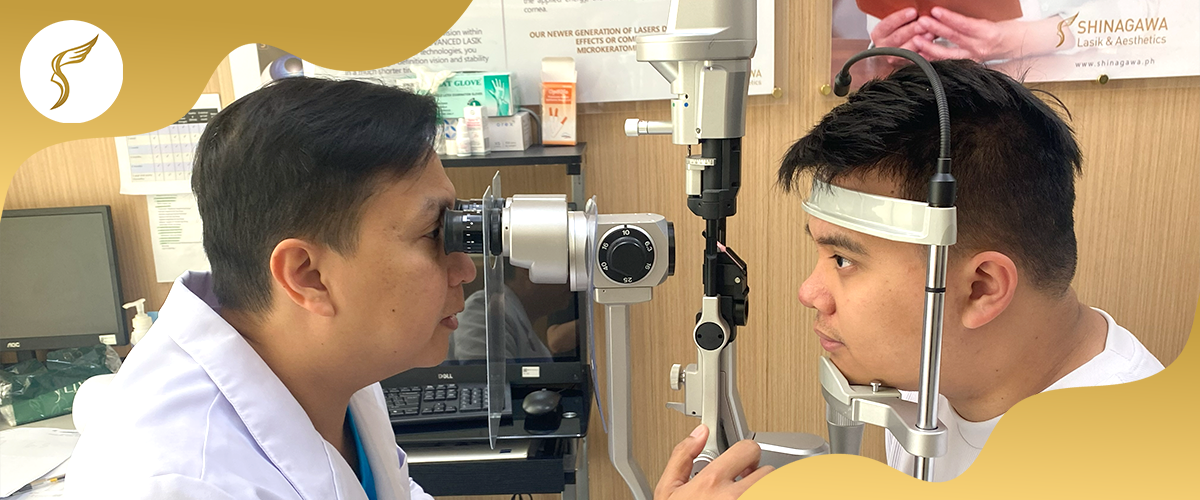
In urgent care or an eye clinic, doctors may do:
Vision test + pupil exam
Eye pressure check
A dilated retina exam (funduscopic exam)
Retinal imaging such as OCT scan
Sometimes an ultrasound if bleeding blocks the view
If vascular cause is suspected: blood pressure, sugar checks, and tests for stroke risk (sometimes carotid or heart evaluation)